Swati Sri
A Washington State University (WSU) study has uncovered the biological mechanism behind one of the most frustrating aspects of endometriosis: why chronic pain often continues long after visible lesions are treated.
Published in the Journal of Clinical Investigation, the research demonstrates that recurring inflammation associated with the disease fundamentally rewires the brain’s pain-processing circuits, creating a self-sustaining cycle of sensitization.
Endometriosis affects more than 10% of reproductive-aged women worldwide—approximately 190 million people—yet treatment outcomes remain inconsistent. The condition occurs when tissue similar to the uterine lining grows outside the uterus, causing severe pelvic pain and infertility. Some patients with minimal tissue growth experience debilitating symptoms, while others with widespread lesions report little discomfort.
The brain connection
“We’re showing that this is not just a local gynecological disease,” said Kanako Hayashi, professor in WSU’s School of Molecular Biosciences and lead author of the study. “Once the system is sensitized, the brain keeps responding, even if the original lesions are gone.”
The research team developed a novel mouse model that mimics repeated menstrual cycles, a departure from previous studies that typically induced endometriosis-like conditions only once. By simulating the repeated backflow of menstrual tissue known as retrograde menstruation, the researchers observed that multiple inflammatory cycles triggered lasting changes in the nervous system.
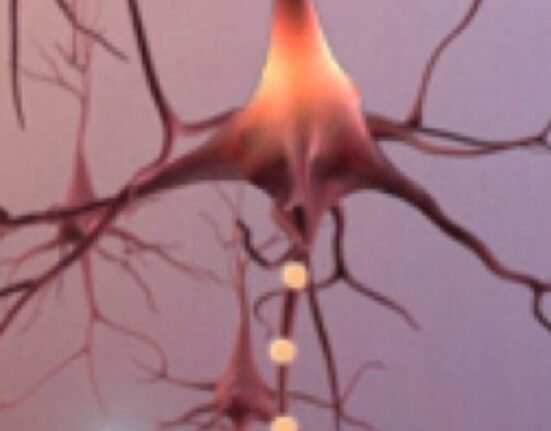
Signals traveled from inflamed pelvic regions along nerve pathways to the spinal cord and brain, where researchers documented clear evidence of neuroinflammation. The repeated stimulation essentially “turned up the volume” on pain sensitivity, creating a hypersensitive state where even small signals register as intensely painful.
“That repeated stimulation acts like turning up the volume again and again,” Hayashi explained. “Eventually, the system becomes hypersensitive. Even small signals can feel very painful.”
A feedback loop of pain
The study reveals that endometriosis creates a destructive feedback loop between the body and brain. “It becomes a feedback loop,” Hayashi noted. “The body is sending signals to the brain, and the brain is reinforcing those signals back to the body.”
This neurological sensitization explains why surgical removal of lesions or hormonal suppression alone often fails to resolve chronic pain in endometriosis patients. Once the brain’s pain-processing circuits are altered, they can continue generating pain signals independently of peripheral tissue status.
To strengthen their findings, the research team analyzed tissue samples from rhesus macaques with naturally occurring endometriosis through collaboration with the Oregon National Primate Research Center. No primate experiments were conducted at WSU.
New treatment possibilities
The research points toward innovative therapeutic approaches that target the nervous system’s inflammatory response rather than focusing exclusively on lesion removal or hormone suppression. In the study, both a commonly used hormonal drug and an immunomodulating compound successfully reduced pain sensitivity and brain inflammation in the mouse model without shrinking the lesions themselves.
“We now have a system where we can follow the entire process from the beginning,” Hayashi said. “That gives us a powerful way to develop better treatments and, hopefully, detect the disease earlier.”
The findings underscore the importance of early intervention in endometriosis cases, as repeated inflammatory cycles appear to drive the neurological changes that make pain increasingly difficult to treat. For the millions of women worldwide suffering from this condition, the research offers hope that future therapies may finally address the root neurological causes of their chronic pain