HQ Team
August 20, 2026: Moderna’s stock more than doubled, surging as much as 177% intraday to $174.38 on Aug. 19, 2026, after the company and Merck announced that their personalized mRNA cancer vaccine met its main goal in a Phase 3 trial for high-risk melanoma.
This is the first time that mRNA-based personalised neoantigen cancer treatment has shown success at late-stage testing. The vaccine, called intismeran autogene (also known as V940 or mRNA-4157), is combined with Merck’s blockbuster immunotherapy Keytruda (pembrolizumab) and given after surgery to patients whose melanoma has already been removed, to prevent recurrence.
The Phase 3 INTerpath-001 trial enrolled 1,137 patients with surgically removed cutaneous (skin-based) melanoma, who received either intismeran plus Keytruda or Keytruda alone. Merck and Moderna said the combination significantly extended recurrence-free survival (RFS, the time a patient lives without their cancer returning) — the trial’s main goal — and also improved a secondary measure of preventing the cancer from spreading to distant organs, both described as “statistically significant and clinically meaningful”. Crucially, the companies have not yet released the actual numbers — no hazard ratio, no percentage risk reduction — pending presentation at a future medical meeting, so the size of the benefit remains unconfirmed. “These first phase 3 findings for intismeran in combination with Keytruda as adjuvant therapy reinforce the promise of a more personalized approach to cancer treatment,” said Dean Li, president of Merck Research Laboratories. The result comes from a preplanned interim analysis; the trial will continue so researchers can eventually report whether the combination also extends overall survival, not just delays recurrence.
How a vaccine gets built for one person
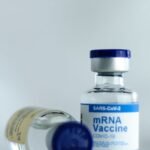
Unlike a conventional vaccine made once and given to millions, intismeran is manufactured fresh for every individual patient. After surgery, researchers sequence the removed tumour to find its neoantigens (mutated proteins unique to that patient’s cancer cells) and design an mRNA shot — instructions that teach the body’s own cells to produce those proteins — encoding up to 34 of them. The immune system then learns to recognise and attack any stray cancer cells carrying the same mutations. It is the same mRNA manufacturing platform behind Moderna’s COVID-19 vaccine, repurposed to fight cancer instead of a virus, and it builds on five-year Phase 2b data (KEYNOTE-942) showing intismeran plus Keytruda cut the risk of recurrence or death by 49% and distant metastasis by 62% compared to Keytruda alone.
A world view: melanoma’s uneven global map
Melanoma is comparatively rare worldwide but disproportionately deadly: the World Health Organization’s International Agency for Research on Cancer estimated 331,722 new melanoma cases and 58,667 deaths globally in 2022, with the heaviest burden in Australia, New Zealand, North America and Northern Europe, where fair-skinned populations face the highest ultraviolet radiation exposure. IARC has separately estimated that more than 80% of melanoma cases worldwide are attributable to UV exposure, and projects global cases will rise more than 50% between 2020 and 2040 as populations age.
In India, melanoma incidence is far lower than in fair-skinned nations, but a large share of Indian cases are acral lentiginous melanoma — a subtype that occurs on palms, soles and under nails and is not linked to sun exposure, meaning it is often diagnosed later and behaves more aggressively. That points to a real access question ahead: intismeran’s per-patient manufacturing model, built around gene sequencing labs and rapid mRNA production, is far more resource-intensive than a shelf-stable drug, and the companies have said nothing yet about pricing or plans to make it available outside high-income markets.
The competition
Merck shares rose more than 10%, and rival mRNA-cancer developer BioNTech, which is racing to prove a similar approach, gained more than 16% in sympathy even though its own melanoma vaccine candidate, autogene cevumeran, has not yet replicated this success. For Moderna, the milestone marks a pivot point after a difficult stretch: the company was rebuffed by the FDA on an earlier bid for accelerated approval in 2024, and its oncology chief said last year the company was leaning harder into cancer research amid a more vaccine-skeptical political climate in the U.S. Analysts at Citi had set a bar before the readout, saying a risk-reduction figure at or below 35% would count as “a clear win”; the companies’ choice not to disclose the exact number yet has left investors trading on the qualitative result alone.
What comes next
Moderna and Merck said they will present full trial data at an upcoming international medical meeting and begin talks with regulators about filing for approval, with a Phase 3 trial in non-small cell lung cancer and Phase 2 studies in renal cell, urothelial and cutaneous squamous cell carcinoma already underway. But independent oncologists caution that an interim readout without published numbers is not the same as a peer-reviewed result, and that a broader Phase 3 population sometimes shows a smaller benefit than the more selected patients of an earlier Phase 2 trial. Overall survival data — proof that patients live longer, not just longer without recurrence — will not be available for years.