HQ Team
June 9, 2026: Researchers at the University of Cambridge and UK biotech firm DIOSynVax have designed a vaccine targeting the entire Sarbecovirus coronavirus family, including SARS-CoV-2, SARS and bat viruses, and it has cleared its first human trial safely, with 39 healthy volunteers showing strong immune responses and no significant side effects.
Why This Is Different From Every Vaccine Before It
Since COVID-19 turned the world upside down in 2020, scientists have been chasing a big question: what if we did not have to keep updating vaccines every time a new variant appeared? What if one shot could protect you against not just the virus circulating now, but the next one, and the one after that?
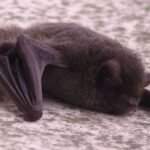
That is exactly what this vaccine is designed to do. Unlike conventional vaccines that target specific virus strains, this vaccine is designed to protect against the Sarbecovirus coronavirus family, which includes SARS-CoV-2, the virus responsible for the COVID-19 pandemic, as well as SARS and several related bat coronaviruses that could potentially spill over into humans in the future.
And crucially, it was not designed by human researchers alone. It was designed by artificial intelligence.
How the AI Built a “Super-Antigen”, Universal Vaccine
The study also marked another milestone: it was the first time a vaccine whose active ingredient was created entirely through computer simulations was tested in people.
Here is how it works. Researchers used artificial intelligence and machine learning to design what they call a “super-antigen” — the component of a vaccine that trains the immune system to recognise and fight infection. Rather than focusing on a single virus strain, the AI system analysed genetic information from Sarbecovirus coronaviruses collected through surveillance programmes worldwide, identified features shared across the entire virus group, and combined them into a single vaccine antigen.
Think of it like this: instead of making a key for one specific lock, the AI designed a master key that fits an entire family of locks — including some that do not yet exist, almost a universal vaccine.
The goal is to create protection not only against known viruses but also against future strains that have not yet emerged.
No Needle Required
There is another detail worth pausing on. The vaccine was delivered needle-free via a micro fluid jet.
Because the method does not require a needle, it could offer an alternative for people who are uncomfortable with injections. Researchers also believe it may make large-scale vaccination campaigns easier and faster, particularly in settings where traditional injections are more difficult to administer.
This is not a minor footnote. Needle-free delivery could be a game-changer for vaccine rollouts in remote areas and low-resource settings — which is often exactly where a pandemic starts.
What the Trial Found
The experimental vaccine was found to be safe and caused no significant side effects in a study involving 39 healthy volunteers. The trial showed that the vaccine stimulated immune responses not only against SARS-CoV-2 and SARS, but also against related bat viruses that have not yet infected humans.
Before human testing began, animal studies showed the vaccine could generate strong immune responses against multiple coronaviruses. The human trial confirms that promise holds up in people.
Breaking the “Dog Chasing Its Tail” Problem
Professor Jonathan Heeney, who led the research from Cambridge’s Department of Veterinary Medicine, did not mince words about what this represents.
“We’ve converted vaccine development from being reactive to being future proof. Our vaccines will continue to provide protection against viruses even as they mutate into new strains,” said Heeney. He added: “We’ve overcome the problem of traditional vaccines, which have limited protection. It means we can escape the constant cycle of chasing the virus variants circulating in humans and updating the vaccines to try to catch up, like a dog chasing its tail.”
The comparison is apt. Every year, flu shots are reformulated. COVID-19 vaccines have been updated repeatedly as variants emerged. This approach proposes a way out of that loop entirely.
Professor Saul Faust from the University of Southampton, the trial’s chief investigator, said, “Viruses like Influenza, Coronaviruses and the Ebola group are evolving continuously and by the time vaccines are rolled out, they may be poorly matched – the current ‘reactive’ vaccine system struggles to keep pace.”
He added: “This new class of universal vaccines are future-proofed. They not only protect against many variants simultaneously, but potentially against related viruses that haven’t yet emerged and spilt over to humans.
“If we can develop and clinically advance this new class of vaccines before a virus outbreak begins, millions of lives could be saved, lockdowns avoided and the economy preserved.”
What Comes Next
A Phase 1 trial is only the beginning. It confirms safety and immune response in a small group — the larger Phase 2 and Phase 3 trials that follow will test effectiveness at scale. But the direction of travel is clear.
Researchers believe the same strategy could eventually be applied to other virus families, including Ebola viruses and influenza viruses.
The vaccine was developed using artificial intelligence to design antigens that target conserved regions shared across multiple coronavirus strains — including SARS-CoV-2 and its variants, SARS-CoV-1, MERS-CoV, and several bat coronaviruses considered potential pandemic threats. Researchers say the vaccine represents a new approach to pandemic preparedness.
We have lived through one pandemic that caught the world flat-footed. The lesson was loud and clear: waiting for a virus to arrive before building a defence is too slow and too costly. What Cambridge and DIOSynVax have demonstrated, in this first, careful human trial, is that science may finally have found a way to get ahead of the threat — before it arrives.
The findings were published in the Journal of Infection.