HQ Staff writer
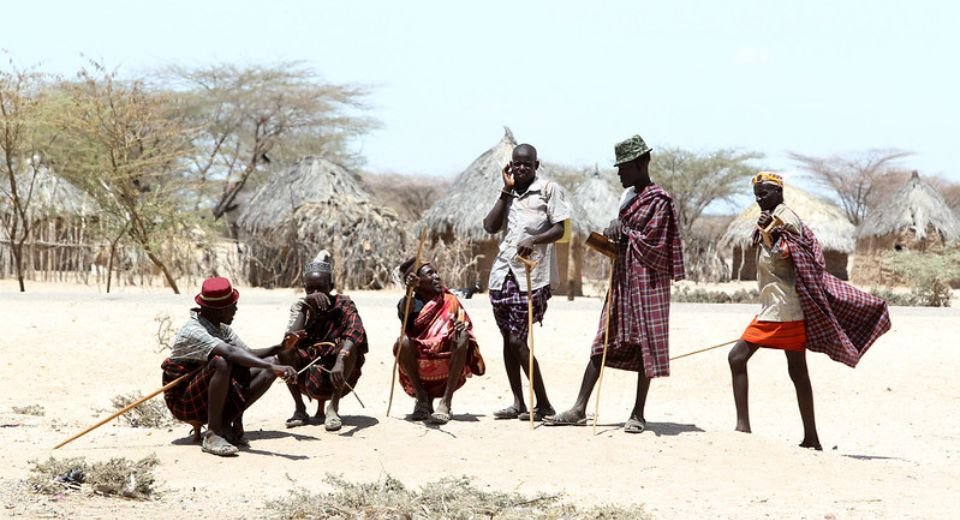
March 26, 2026: Deep in the sun-scorched lands of northern Kenya, where temperatures soar and water sources vanish for months at a time, a community of nomadic pastoralists the Turkana, has quietly been doing what scientists once thought nearly impossible — thriving. For generations, the Turkana people have survived on little more than meat, blood, and milk, with a fraction of the water intake the average human needs. Finally, a genetic study of the pastoral peope reveals why they don’t just survive, but flourish.
In a genomic study, an international team of researchers has sequenced the complete genomes of 367 Turkana individuals, and what they found buried in that DNA could rewrite our understanding of human adaptability itself.
The study, a partnership between U.S. universities (including Vanderbilt, Arizona State, and Berkeley) and the Kenya Medical Research Institute (KEMRI), focused on the Turkana because their traditional lifestyle—living on meat, blood, and milk with minimal water intake—represents an extreme test of human physiological resilience . “We wanted to understand the genetic basis of how these populations have adapted to such a harsh climate over thousands of years,” said one of the lead researchers.
The genetic blueprint of desert survival
By comparing the Turkana genomes with those of other global populations, the team identified eight regions of the genome under strong recent positive selection, meaning these genetic changes provided a survival advantage and were rapidly passed through generations .
The most striking adaptations are linked to water conservation and kidney function. The researchers found strong selection in genes involved in the kidney’s ability to reabsorb water and concentrate urine, allowing the Turkana to maintain hydration with far less fluid intake than non-adapted populations . “This is not just about drinking less water,” explained a co-author. “It’s about the body’s ability to dramatically reduce water loss and retain every drop, protecting against kidney damage even in a state of chronic low-level dehydration.”
Dietary adaptations to a unique pastoralist diet
The study also uncovered genetic shifts related to metabolism and lipid processing, which likely support a diet extremely high in animal protein and fat (from meat, blood, and milk) and very low in carbohydrates. These adaptations help manage the unique nutritional profile of pastoralist life, where water is scarce but livestock provide a consistent, calorie-dense food source.
The findings are more than an academic exercise in human evolution. They provide a real-world genetic blueprint for how the human body can be rewired to handle water stress and extreme diets. This has potential implications for understanding kidney disease, hypertension, and metabolic disorders in the general population. “By studying natural human experiments like the Turkana, we can identify new genes and pathways that might be targeted to help people with water-balance disorders or chronic kidney disease,” noted a researcher from Arizona State University .
Ethical community partnership
Critically, the study was conducted with the full involvement and consent of the Turkana community. Researchers emphasized that the project was guided by local needs and priorities, with findings shared back to the community. This community-led approach sets a standard for genomic research in Africa, moving away from extractive practices toward true partnership 910.
The Turkana genome project illustrates that human adaptation to extreme environments is not a thing of the distant past. It is an ongoing, dynamic process that can be observed and decoded today. As climate change increases water scarcity globally, understanding the biological mechanisms of resilience—honed over millennia in places like Turkana—may offer clues for how all of humanity can better adapt to a drier future.