Swati Sri
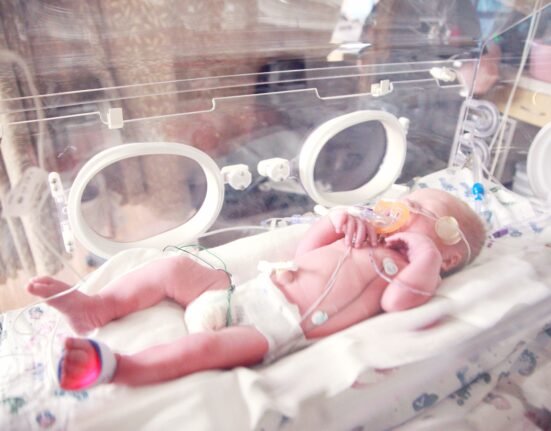
April 25, 2026: The World Health Organisation (WHO), prequalified the first anti malaria treatment developed specifically for newborns and young infants weighing between two and five kilograms. The announcement coincides with World Malaria Day on April 25.
The approved drug is artemether-lumefantrine, sold under the brand name Coartem Baby and developed through a collaboration between Swiss pharmaceutical giant Novartis and the Geneva-based non-profit Medicines for Malaria Venture (MMV). WHO prequalification is a key milestone for donor-funded and public sector purchasing by UN and other procurement agencies.
The gap that existed until now
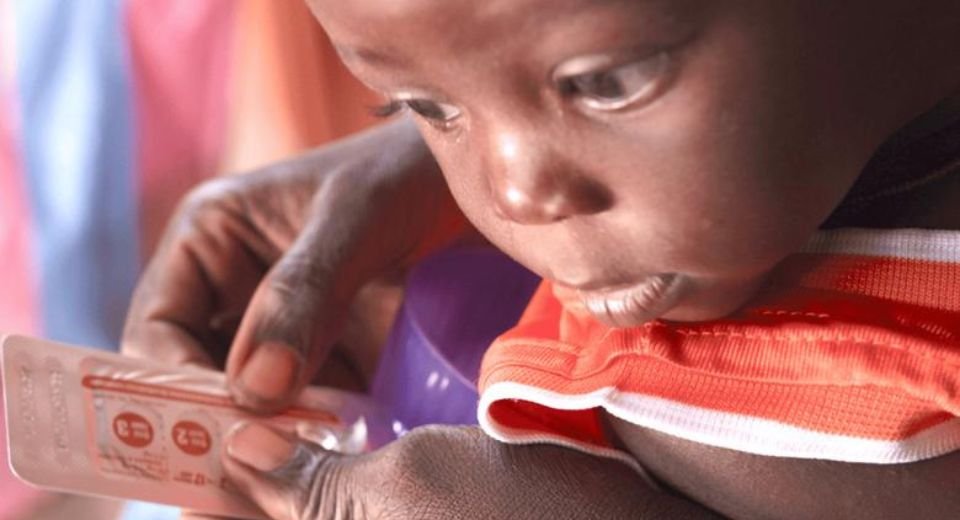
For anyone who assumed medicine had long solved the basic problem of treating the world’s smallest malaria patients, the reality is striking. Up to now, infants have been treated with formulations intended for older children, which carry a greater risk of dosage errors, side effects and toxicity.
Until recently, there has been no approved malaria treatment for infants weighing less than 4.5 kilograms. The smallest infants with malaria have instead been treated with formulations intended for use in older children, which may either increase the risk of side effects and toxicity or underdosing.
The consequence of this gap is not abstract. “As doctors we’ve tended to look for malaria in older children, but when newborn babies got sick nobody seemed to know what to do,” said Dr Emmanuel Aidoo, a paediatrician at Methodist Hospital in Ankaase, Ghana.
The Scale of the Problem
In 2024, there were an estimated 282 million malaria cases and 610,000 deaths in 80 countries. Africa accounts for 95% of cases and deaths, with children under five accounting for three-quarters of those deaths.
WHO prequalification will help expand access to quality-assured treatment for one of the most underserved patient groups, and enable public sector procurement, contributing to closing a long-standing treatment gap for some 30 million babies born each year in malaria-endemic areas.
Globally, 70% of countries do not have regulatory systems that are robust enough to oversee medicines, vaccines, tests and medical devices. That is precisely why WHO prequalification carries so much weight — it acts as a universal quality stamp that allows UN agencies and international donors to procure and distribute the treatment at scale without each country needing to run its own regulatory review.
WHO Director-General Dr Tedros Adhanom Ghebreyesus said: “For centuries, malaria has stolen children from their parents, and health, wealth and hope from communities. But today, the story is changing. New vaccines, diagnostic tests, next-generation mosquito nets and effective medicines, including those adapted for the youngest, are helping to turn the tide. Ending malaria in our lifetime is no longer a dream — it is a real possibility, but only with sustained political and financial commitment. Now we can. Now we must.”
Dr Daniel Ngamije Madandi, Director of Malaria and Neglected Tropical Diseases at WHO, said: “This new formulation of artemether-lumefantrine represents an innovation as there are no antimalarial medicines specifically developed for the treatment of uncomplicated malaria in children from 2 to 5 kilograms body weight.”
Dr Martin Fitchet, CEO of MMV, added: “For too long, newborns and young infants with malaria have fallen through the cracks because existing treatments were not designed with them in mind.”
New diagnostic tests also cleared
The infant treatment was not the only major announcement from WHO on April 24. WHO also prequalified three new rapid diagnostic tests (RDTs) designed to address emerging diagnostic challenges for malaria. The most common malaria RDTs for P. falciparum parasite work by detecting the protein HRP2. But based on reported studies and surveys in 46 countries, some strains of the malaria parasite have lost the gene that makes this protein — so they become “invisible” to HRP2-based RDTs, leading to false-negative results. The new diagnostic tools are designed to catch exactly these cases, parasites that older tests would have missed entirely.
Stalled progress
While 47 countries have been certified malaria-free and 37 countries reported fewer than 1,000 cases in 2024, progress at the global level is stalling.
Gains are at risk due to multiple challenges, including drug resistance, insecticide resistance, diagnostic failure, and severe reductions in international development assistance. That last point carries particular weight in the current global funding environment, where major donor nations have cut foreign aid budgets.
Despite this, substantial progress has been made, with an estimated 2.3 billion malaria infections prevented and 14 million lives saved worldwide since 2000.
For the estimated 30 million babies born each year in malaria-endemic regions — most of them in sub-Saharan Africa — this World Malaria Day marks the first time the global health system can say, with full regulatory confidence, that there is a medicine made specifically for them.