HQ Team
September 11, 2026: A measles outbreak in the South Asian nation of Bangladesh, which has killed nearly 1,000 people, is a major reversal of previous progress toward the elimination of the disease, according to an editorial in the International Journal of Infectious Diseases.
The country’s Expanded Programme on Immunisation (EPI), which was introduced in 1979, increased the proportion of fully immunised children from two percent to 81.6%. It saved an estimated 94,000 lives and prevented about five million childhood illnesses each year, the authors wrote.
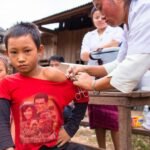
In Bangladesh, routine measles vaccination was provided to children from nine months of age, supplemented by nationwide measles vaccination campaigns conducted approximately every four years.
However, no such campaigns have been implemented since 2020, initially due to the COVID-19 pandemic and subsequently because of political unrest.
Shortage of health workers
A planned follow-up campaign in 2024 was not implemented due to the political situation. A shortfall of health workers was reported, with 45% of positions vacant in more than half of districts in 2025, while several senior roles in the health sector remained unfilled for months during transitions across three successive governments over the past two years.
The EPI was restructured, and measles vaccine coverage dropped from about 90% in 2020 to roughly 57% in 2025. This prolonged interruption has likely contributed to the accumulation of susceptible children, increasing the risk of large-scale outbreaks, authors Najmul Haider, Md Zakiul Hassan, and Rumi Ahmed Khan wrote.
In April 2025, Gavi, the Vaccine Alliance, UNICEF, and the World Health Organization reported that around 400,000 children in Bangladesh remain unimmunized, including about 70,000 (1.5%) who have received no vaccines.
Coverage gaps are more pronounced in urban areas, where only 79% of children are fully vaccinated, with 2.4% zero-dose and 9.8% under-immunised, compared with 85% coverage in rural areas.
Pertussis
Recent vaccination shortages have not been limited to measles-containing vaccines; they have also affected other childhood vaccines delivered through the EPI, including the pentavalent vaccine (diphtheria, pertussis, Haemophilus influenzae type b infection, and rubella), which is co-administered with measles.
Although these infections generally have lower transmissibility than measles and therefore require comparatively lower herd immunity thresholds, this should not be interpreted as a low outbreak risk.
“The ongoing outbreak should therefore be viewed as an early warning signal rather than an isolated event,” the authors stated.
“Without rapid restoration and equitable distribution of vaccination coverage, the risk extends beyond measles to a broader resurgence of childhood infectious diseases in the near future.”