HQ Team
September 24, 2026: Osteoporosis, a disease that thins bones and makes patients vulnerable to fractures at the slightest falls. This progressive bone disease affects over 500 million people worldwide. With no cure to the disease, scientists say that they may have found a living medicine to treat the disease
Ten women with severe osteoporosis received a single infusion of their own bone-marrow cells, re-engineered in the lab. In the two years that followed, their fractures nearly stopped. The Phase 1 trial, led by hematologist José Moraleda of the University of Murcia in Spain, was published in Cell this month
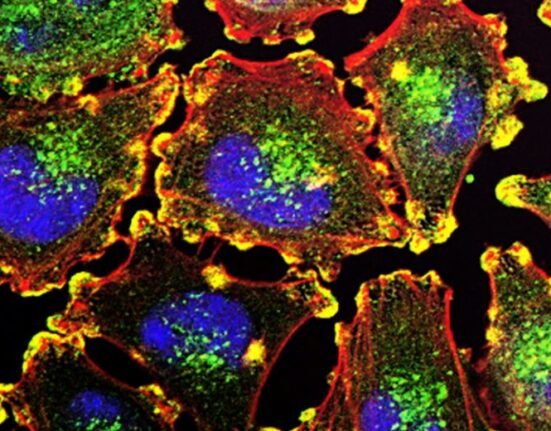
The cells used were mesenchymal stromal cells (MSCs), marrow “parent” cells that can become bone-building osteoblasts. Infused into a vein, lab-grown MSCs are poor navigators. So the team attached the sugar fucose to a surface molecule called CD44, letting the cells latch onto E-selectin, a docking protein on marrow blood vessels. The tag lasts about 48 hours, and the DNA is untouched.
This concept traces itself to a 2008 mouse study in Nature Medicine, and a 2018 Cytotherapy paper described producing the fucosylated cells to clinical-grade standards.
The fracture numbers are dramatic, but rest on very little
Over the first two years after infusion, fractures across the group fell from 8 a year to 0.5, a 94% reduction. Conventional DXA bone-density scans, however, showed no significant group-level improvement. Median follow-up was about six years, with no serious adverse events attributed to the infusion. Biopsies showed more bone tissue in seven of the ten women, and CT-based scans suggested better spongy bone.
“The results show that this treatment approach has an excellent safety profile and is feasible,” researchers explain.
“However, strikingly… the results also reveal a durable reduction in the incidence of fragility fractures accompanied by increased serum levels of bone neoformation biomarkers, coupled with radiographic and histomorphometric evidence of an osteorestorative effect within trabecular bone.”
Why 94% is nothing to celebrate about
By our arithmetic, 94% is roughly 16 fractures in the two years before and one after, across ten people. There was no control group, most participants also received conventional osteoporosis treatment, and the infused cells could not be tracked inside the body. By contrast, the randomised FRAME trial of romosozumab enrolled 7,180 women and found a 73% drop in new spinal fractures at 12 months versus placebo.
Also, co-author Robert Sackstein, a developer of the technique, holds related intellectual property, which gives the research methodology some context.
Access is the harder problem
Osteoporosis is estimated to affect as many as 500 million people and to trigger up to 37 million fragility fractures a year. In India, over 50 million people have osteoporosis or low bone mass. The disease can strike 10 to 20 years earlier there than in Western countries, and surveys suggest only 10 to 15% of people are aware of it. A therapy built on roughly a month of individualised cell culture is far from those patients. The nearest regulatory milestone is the FDA’s December 2024 approval of Ryoncil,
Larger studies with more sites and more diverse participants are needed. A randomised control arm and cell tracking would settle the biggest questions.