HQ Team
September 23, 2026: The human brain didn’t evolve as one single unit, but as two distinct organs independently, Stanford researchers found — a discovery that holds promise to fight brain stem diseases such as spinal muscular atrophy and amyotrophic lateral sclerosis.
Researchers, for decades, have subscribed to the theory that there is a single progenitor cell early in development that gives rise to the entire brain. This model suggested all parts of the brain shared a common developmental origin.
The Stanford Medicine researchers overturned this.
The new research finding shows that the human brain consists of two ancient nervous systems cleverly packaged together — a more primitive part that regulates our hearts’ beating, our breathing and other functions, and another that makes us distinctly human, capable of poetry, mathematics and wondering about our own origins.
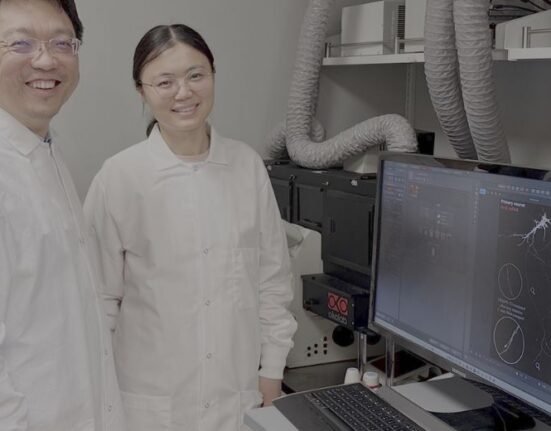
“We’ve shown for the first time that the front of the brain arises from a totally different progenitor cell than the back of the brain,” said Kyle Loh, PhD, associate professor of developmental biology at Stanford Medicine and senior author of the study.
‘Grow neurons’
“Our discovery means that we can now grow neurons from the back of the brain, the hindbrain, in a petri dish and study their functions.”
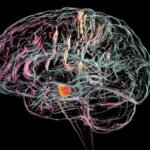
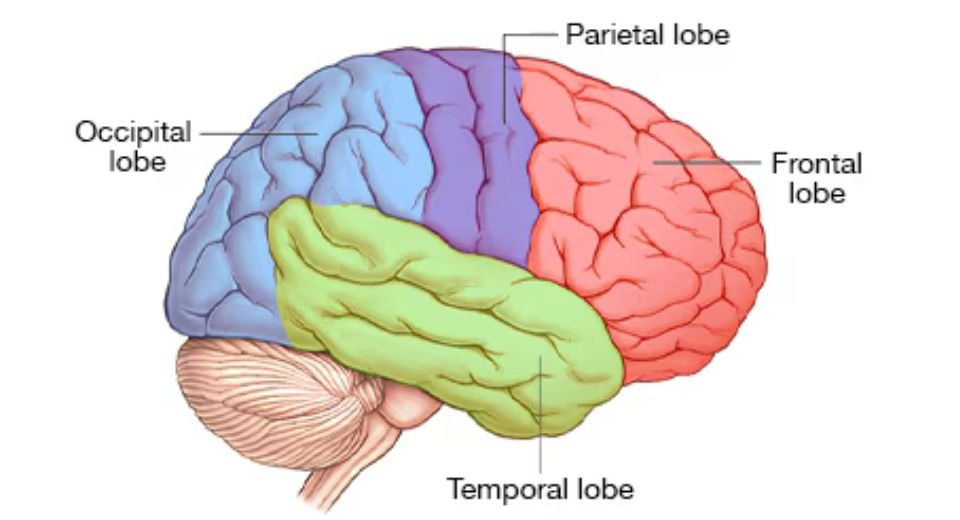
The adult brain has three main regions: the forebrain, midbrain and hindbrain. The forebrain handles higher-level thinking — language, consciousness and abstract reasoning.
In contrast, the hindbrain, located at the back of the skull and often called the brain stem, controls essential, automatic functions that keep us alive: breathing, sleeping, and regulating our heartbeat and hunger urges.
The hindbrain neurons also control the muscles of the face, tongue and throat, which affect speech and swallowing.
Despite the critical importance of the hindbrain, scientists have struggled for decades to generate human hindbrain neurons in the laboratory. This gap has hampered research into devastating diseases affecting the brain stem.
Hindbrain circuits
Spinal muscular atrophy is a leading genetic cause of death in children under a year of age. Amyotrophic lateral sclerosis (ALS), which is often diagnosed between the ages of 40 and 70, affects both the forebrain and the hindbrain.
In both disorders, certain hindbrain neurons gradually cease to function, and the patient loses the ability to swallow, which can cause pneumonia when food or liquid is inhaled into the lungs; eventually, patients lose the ability to breathe.
The hindbrain also contains circuits that regulate hunger — which is precisely how weight-loss drugs like semaglutide work.
The researchers’ breakthrough came from studying the earliest moments of embryonic development, during a stage called gastrulation when the body first takes shape.
Stanford Medicine graduate students Carolyn C Dundes and Rayyan Jokhai, co-first authors of the research, discovered that the hindbrain follows a separate developmental path, running in parallel to — rather than branching off from — the pathway that creates the forebrain and midbrain.
Mouse embryos
The researchers learned this from examining developing mouse embryos. They identified two different brain progenitor cells.
One, which expresses a gene called Otx2, is destined to become the forebrain and midbrain. The other, which expresses a gene called Gbx2, is committed to forming the hindbrain.
They showed that these two cell populations never overlap; they are mutually exclusive from the earliest stages of development.
The team then examined the DNA packaging, or chromatin, in these cells.
Chromatin is a way cells determine which genes can be easily accessed and which are bundled away out of reach. What they found was striking: The anterior neural ectoderm (future forebrain and midbrain) and posterior neural ectoderm (future hindbrain) have fundamentally different chromatin configurations.
These differences essentially locked each progenitor cell into its respective fate, like travellers on parallel tracks that never cross.
Early embryonic development
“Previous attempts to make hindbrain neurons likely tried to coax forebrain and midbrain progenitors into hindbrain cells, which our study shows is not possible,” Jokhai said.
This explained decades of frustration in the field — scientists had been trying to turn one type of progenitor cell into another that it is fundamentally incapable of becoming.
“In stem cell biology, people are always fixated on creating the end cell type, like the neuron,” Jokhai said. “But it’s important to begin at the earliest stages of embryonic development. Our careful attention to that early time point allowed us to find this fundamental split in brain development.”
Equipped with these insights, the researchers for the first time successfully coaxed human pluripotent stem cells (a kind of cell that can create any cell in the human body) to become functional hindbrain motor neurons in the laboratory.
These lab-grown neurons displayed all the hallmarks of authentic hindbrain cells: They exhibited waves of electrical activity called action potentials and made proteins that identify the segments of the hindbrain that control facial and swallowing muscles.
Acorn worms
Looking back more than 550 million years of evolutionary time, the researchers found that the same two-origin brain pattern is found in chickens, zebrafish, and, remarkably, in acorn worms, tiny creatures living on the ocean floor that share a distant common ancestor with humans.
Jellyfish, which diverged from humans about 600 to 700 million years ago, have two nervous systems at different ends of their body.
“Our research suggests that evolution took two existing neural systems and pushed them together spatially,” Loh said. “Having the brain as one organ would probably be more efficient, but we rely on this primordial way to make the brain as two separate pieces.”
“I was surprised at our findings because the word ‘brain’ implies a contiguous organ that likely has a singular origin,” Jokhai said. “But even 500 million years ago, there were these separate neural systems, which now almost operate as one, which is very cool.”