HQ Team
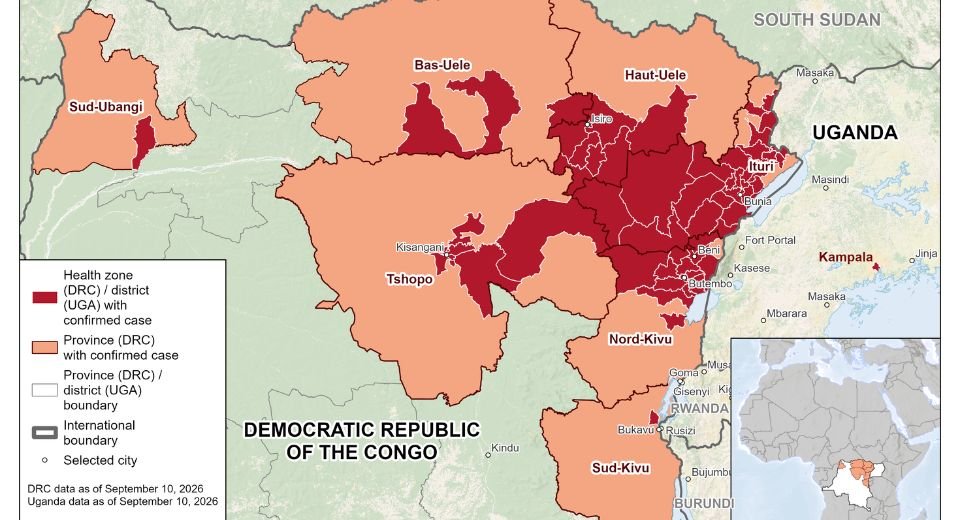
September 14, 2026: The death toll from the Ebola virus, which is sweeping through the heart of the Central African region of the Democratic Republic of the Congo (DRC), has neared 3,500 with about 7,000 confirmed cases, the second-largest Ebola outbreak on record.
The deadly outbreak, caused by Bundibugyo virus, a type of Ebola virus, surpassed 1,000 confirmed cases within 40 days of response activation. In comparison, the 2018 Ebola outbreak in DRC took approximately 235 days to reach more than 1,000 cases, according to the US’s Centers for Disease Control and Prevention.
As os September 9, there were 6,492 confirmed cases in DRC and 3,349 deaths.
Neighbouring Uganda reported 21 confirmed and probable cases and three deaths. The last reported case there was confirmed June 21. France reported a confirmed case.
‘Rapidly evolving’
The number of reported cases in Congo may change as the situation “is rapidly evolving.”
*Investigation of additional cases is ongoing, and case counts are expected to change. The DRC MoH (Ministry of Health) does not include probable cases in its official reporting.
“Suspected cases and suspected deaths in DRC have been temporarily excluded from the count pending ongoing investigations and data standardisation. The Uganda MoH does not include suspected cases in its official reporting.”
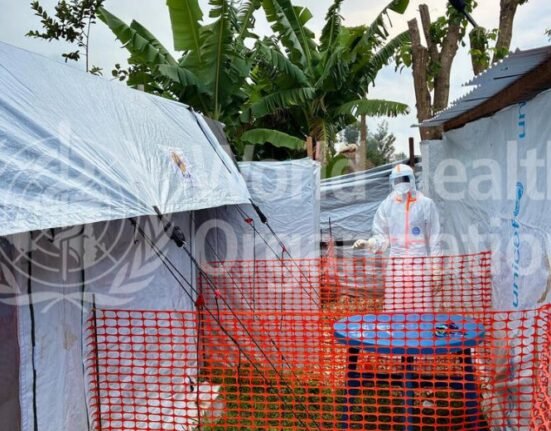
The response to this outbreak is “challenging” because of several complex circumstances in the region.
Limited health infrastructure, including limited access to healthcare, diagnostic and laboratory services, infection prevention and control supplies, and other basic services, makes stopping this outbreak more difficult.
Violence against healthcare workers
An ongoing conflict in the region where the Ebola is most severe complicates contact tracing and infection prevention and control.
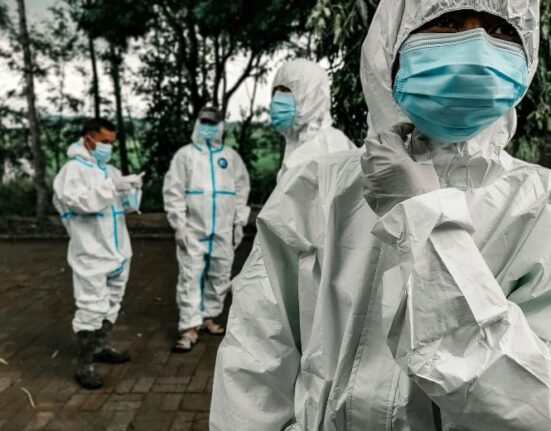
Violence against healthcare workers and shortages of personal protective equipment are leading to healthcare workers becoming infected while treating patients.
Frequent movement of people and cross-border travel increase the risk of spread to Uganda, South Sudan, Rwanda, and other areas. Lack of trust in the government and misinformation make communicating about Ebola more difficult, according to the CDC.
The CDC stated that travellers, including Americans, who have been in Congo within 21 days of their flight will not be allowed to board commercial flights to US destinations.
“US citizens and US nationals who have been present in Uganda or South Sudan (and not present in Congo) within 21 days of arrival in the United States must only enter through designated airports for enhanced screening.”
The likelihood of infection for people of the European Union living in or travelling to affected areas is estimated to be “low” — the same as the US’s CDC estimate.
The European Centre for Disease Prevention and Control stated: “Given the very low likelihood of importation and secondary transmission, the likelihood of infection for people living in the EU/EEA is estimated to be very low. This assessment will be reviewed as further information becomes available.”
Viral hemorrhagic fever
Bundibugyo virus disease (BVD) is a rare and potentially deadly type of viral hemorrhagic fever. BVD is caused by Bundibugyo virus, a type of Ebola virus. BVD has caused two previous outbreaks, one in Uganda in 2007 and one in DRC in 2012.
It is spread by contact with the blood or bodily fluids of a person who is infected with or has died from BVD. It is also spread by contact with contaminated objects (such as clothing, bedding, needles, and medical equipment), or contact with animals, such as bats and nonhuman primates, that are infected with BVD.
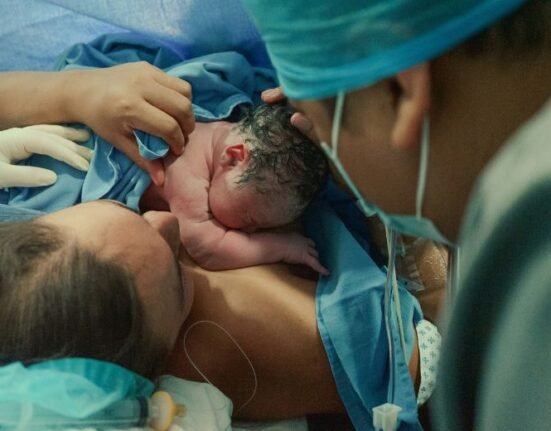
Semen, breast milk, and vaginal and pregnancy-related fluids are also known to transmit Ebola.
Symptoms include fever, headache, muscle pain, weakness, diarrhoea, vomiting, stomach pain, and unexplained bleeding or bruising (a late stage of illness). No vaccines or specific treatments are approved to prevent or treat BVD. Early supportive care improves the chance of survival.
Two vaccines designed specifically against Bundibugyo virus have entered human trials. A separate vaccine has shown cross-protection in animal studies.