HQ Team
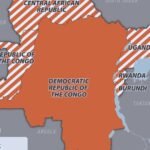
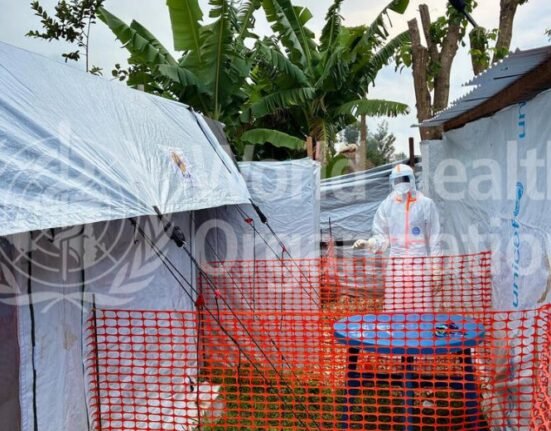
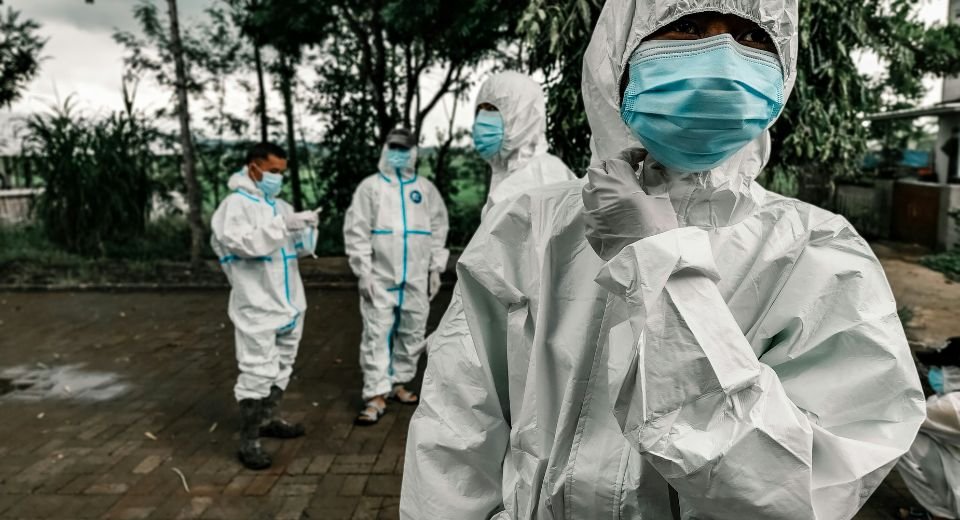
May 19, 2026: The WHO has declared an Ebola outbreak in the Democratic Republic of Congo (DRC) and Uganda as a public health emergency following the death of 80 people linked to the disease and stated the risk was high that it could spread to neighbouring nations.
On May 17, the global health agency declared a public health emergency of international concern over the Ebola outbreak. The WHO stated that the outbreak does not meet the criteria of a pandemic emergency, as defined in the International Health Regulations, according to a statement.
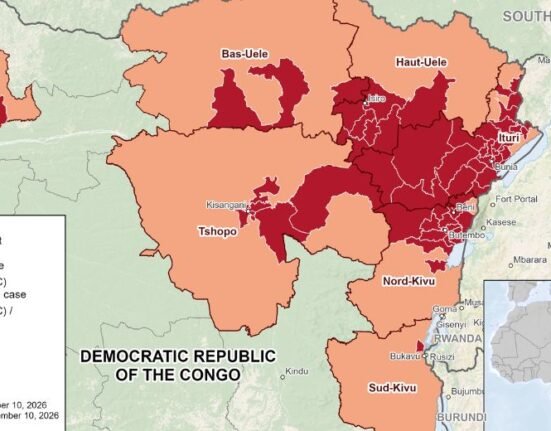
As of May 16, eight laboratory-confirmed cases, 246 suspected cases and 80 suspected deaths have been reported in Ituri Province of the Democratic Republic of the Congo across at least three health zones, including Bunia, Rwampara and Mongbwalu
In addition, two laboratory-confirmed cases (including one death) with no apparent link to each other have been reported in Kampala, Uganda, within 24 hours of each other, on 15 and 16 May 2026, among two individuals travelling from the Democratic Republic of the Congo.
German care
On May 16, an individual returning from Ituri to Kinshasa tested negative for Bundibugyo virus on confirmatory testing by INRB (National Institute of Biomedical Research, Congo), and is therefore not considered a confirmed case.
The US Centers For Disease Control and Prevention (CDC) stated that on May 17, an American who was exposed as part of their work caring for patients in DRC tested positive for Ebola Bundibugyo disease.
The person developed symptoms over the weekend and tested positive late on Sunday, according to a statement. The CDC is “working hand-in-hand with the US Department of State to move the patient to Germany for treatment and care. In addition to being a shorter flight time, Germany has prior experience caring for Ebola patients. High-risk contacts associated with this exposure are also being moved to Germany.”
Patients have experienced classic Ebola disease symptoms like fever, headache, vomiting, severe weakness, abdominal pain, nosebleeds, and vomiting blood. In DRC, most cases have occurred in people between 20 and 39 years old, and two-thirds have been in female patients, according to the CDC statement. This is the 17th outbreak of Ebola in DRC since 1976. The most recent outbreak ended in December 2025.
‘Not safe from future pandemics’
A decade after Ebola exposed dangerous gaps in outbreak preparedness – and six years after COVID-19 turned those gaps into a global catastrophe – the evidence is clear: the world is not safer from pandemics, according to a report by the Global Preparedness Monitoring Board, an independent monitoring and accountability body of the WHO and the World Bank, to ensure preparedness for global health crises.
The Board warned that a decade of investment has not kept pace with rising pandemic risk. New initiatives have improved aspects of preparedness, but overall these efforts have been offset by increasing geopolitical fragmentation, ecological disruption, and global travel, especially as development assistance falls to levels not seen since 2009.
“If trust and cooperation continue to fracture, every country will be more exposed when the next pandemic strikes. Preparedness is not only a technical challenge — it is a test of political leadership,” said the Board’s Co-Chair Joy Phumaphi.